Death and rebirth of the product designer
What is next for the product designer archetype?
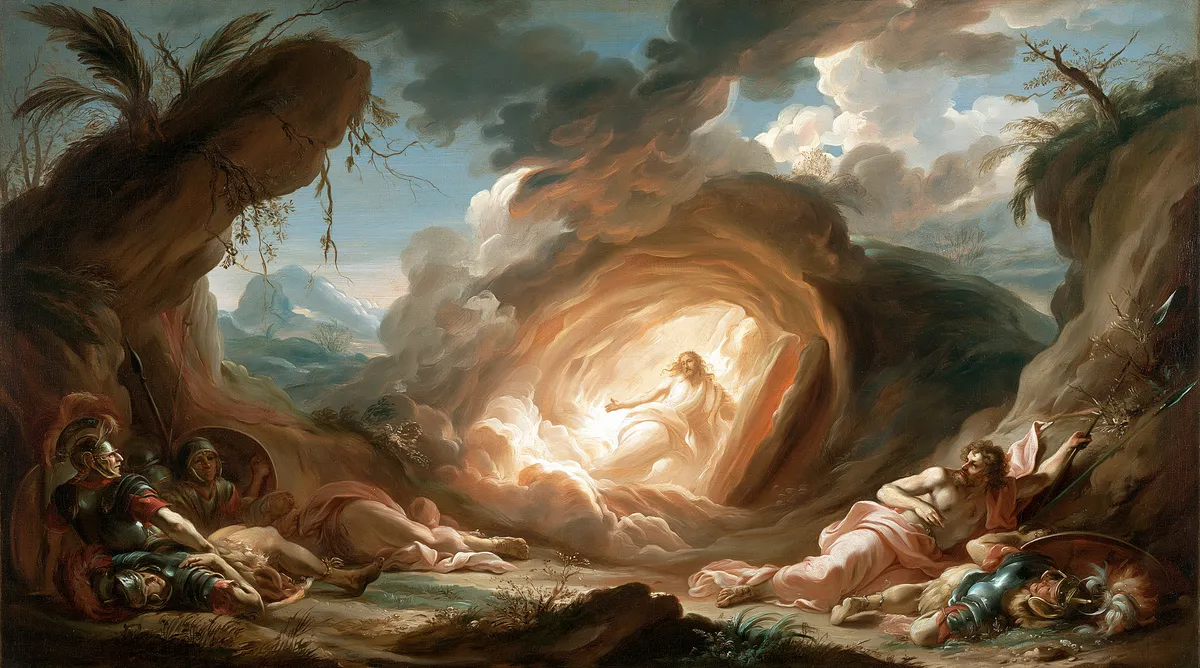
A few months ago, there was a time where you couldn’t go a week without a new company (or influencer) proclaiming that ‘design is dead’ and touting their product or workflow as the one that killed design. I don’t think design is dying, but the role of the designer in the org is undergoing its next evolution.
As models and scaffolds improve, AI will slowly improve in it’s capability to generate product design assets at a level that exceeds what most non-designers can achieve with a design system. The way I see it, there seem to be three possible directions for product designers to evolve in.
1. Rise of the brand designer:
A few years ago, it would be hard to find a brand designer in-house. Most brand work was outsourced to agencies but we are seeing this change with the focus on taste. Almost every startup JD you see these days expect a product designer who can also do brand or brand designers who can do product design (and even videos). This holds true even in the B2B space, where previously no one cared for brand or product design.
2. The prototyper and gate-keeper:
Meanwhile within big orgs, the adoption of AI has been unstructured. From my conversations, we see designers being expected to use AI to make their design prototypes and in some cases being expected to draft PRs to fix UI bugs. The role of the designer within such orgs does not seem to have changed. The same work is being done, the processes move a bit faster and a lot of tokens being burned. So in the short term, the layoffs may continue in the big orgs and in the mid-term I see the designers in these orgs moving towards a role of a gate-keeper of quality rather than the creator of experiences.
3. The builder designer:
Personally, I find this role as the spiritual successor for the product designer. The builder is one that can own far more than the design of the feature while partnering with other departments to deliver outcomes. Though it was touted as a way ahead, we have seen less adoption as it would need folks and orgs to re-look at their ways of working and not enough orgs have the incentive to do so yet. (Razorpay is one such org that’s been championing this role in Bangalore.)
The “Comb-Shaped” Designer
One thing common in all these three directions is the expectation that the designer is now expected to do more, in less time, while the bar for quality is only moves higher. These tasks used to be done by a small team of designers but the marketing around AI tooling seems to expect that this is possible by a team of one. Of course, there are talented designers who can probably churn out high quality work that’s expected but they are rare and they don’t come cheap. Each of these new role-directions have several new skills that a designer would need to master to be good at. Expecting the designer you hire to excel at everything is setting them up to fail.
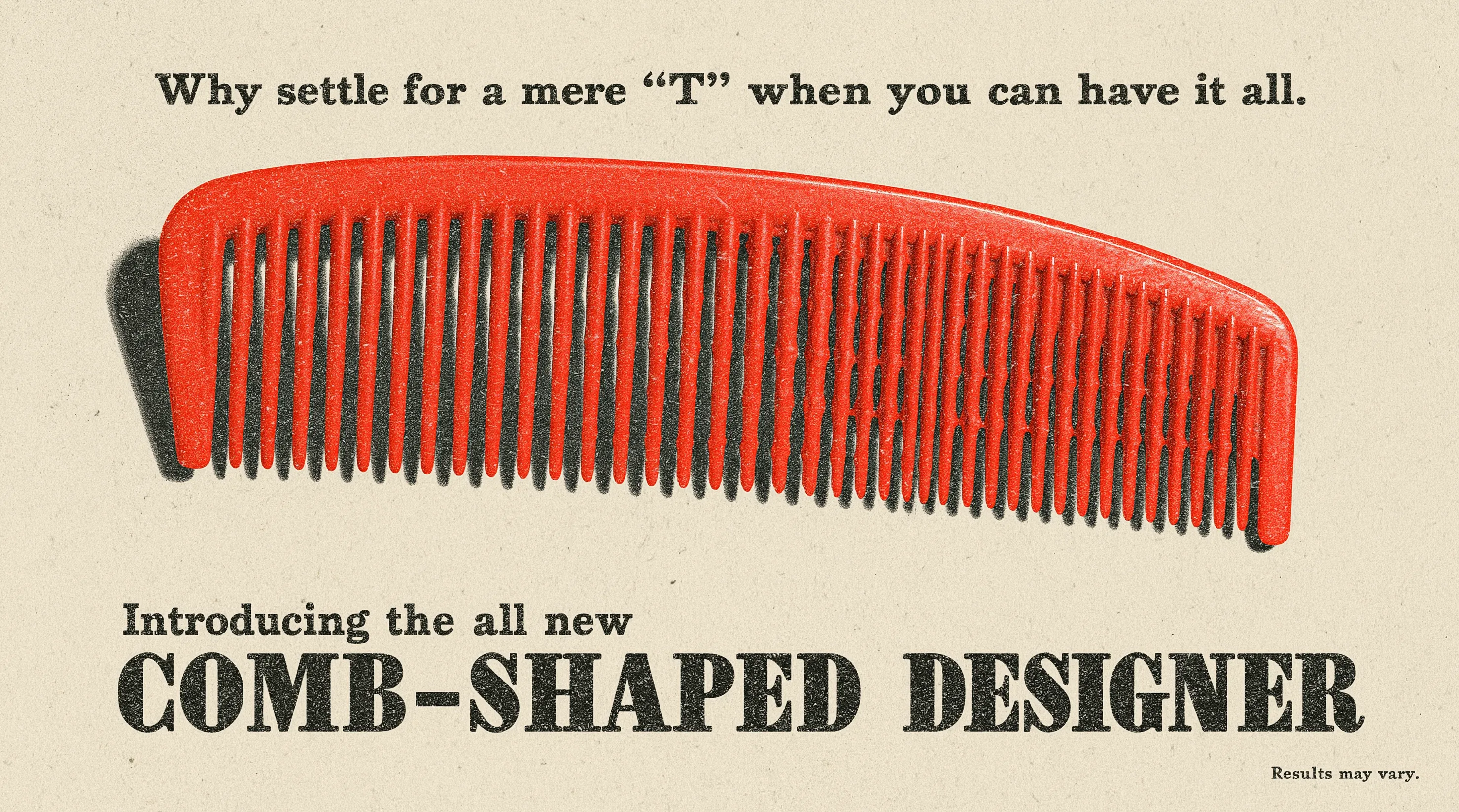
Combing over AI’s bald spots
Another thing that is common in these three directions is that these are all tasks that AI isn’t able to perform1. So the industry expects that product designers can step in to comb over the bald spots that AI is showing and craft a new hair style.
AI can generate assets but not define a brand, AI can create visualizations but not craft an immersive narrative, AI can create prototypes but not ensure coherence.
But working on these tasks expects you to switch between different cognitive states. Doing this over a course of a workday can get mentally draining as your brain struggles to keep up. Add to this that there are new developments ever other week in the field of AI. That’s a recipe for burnout).
Left, Right or Center Partitions
Product designers today are working at the cutting edge in a way that would have been hard to imagine even a year ago. They have access to tools and a real chance to bring their visions to life.
Your work no longer has to be defined by your job. You can establish an identity outside of it—one that is actually your own. If you look closely at the work of the best designers out there right now, that’s what they are doing. They are keeping their strengths and utilising technology to build on that strength. You have the agency too. Don’t let the noise drown you out. Take the time to find that one skill that you want to retain in the age of generative AI, that which brings you joy, and polish it.
After all, you are still a product designer. AI can’t take that away unless you let it.
Attribution: Both images have been generated using Midjourney 8.2
Thanks to Debanshu, Manas and Tanvi for providing feedback on the early draft.
Footnotes
-
as of August 2026 ↩
